
Productivity doesn’t come from systems alone; it comes from employees who feel genuinely valued. Many companies invest heavily in technology, processes, and strategies, yet overlook one critical factor: how to make employees truly want to perform at their best.
An employee reward program is no longer just an HR “nice-to-have.” When designed thoughtfully, it becomes a strategic lever that drives motivation, productivity, and long-term loyalty.
What Is an Employee Reward Program?
Simply put, an employee reward program is a structured system created by a company to recognize and appreciate employees for their contributions, performance, positive behavior, or specific achievements. Rewards act as a form of acknowledgment that employees’ efforts matter and create real impact for the organization.
However, an effective employee reward program is not ad hoc or occasional. It’s not about spontaneous gifts or one-off bonuses. Instead, it is an integral part of a broader human capital strategy that aligns employee recognition with business objectives.
Reward vs. Compensation: What’s the Difference?
These two terms are often used interchangeably, but they serve very different purposes.
-
-
- Compensation refers to fixed elements such as salary, allowances, and standard benefits employees receive in exchange for their work.
- Rewards are additional forms of appreciation beyond compensation, granted based on specific achievements, behaviors, or contributions.
-
In simple terms, compensation answers “How much do I earn for working here?”. Rewards answer “How much does the company value my contribution?”
Why Employee Reward Programs Benefit Companies
Some organizations still see reward programs as an added cost. In reality, when viewed long term, rewards are a strategic investment.
Here’s why employee reward programs deliver tangible value:
1. Increased Motivation and Employee Engagement
Employees who feel appreciated are more emotionally invested in their work. They don’t just work to meet obligations; they work because their contributions feel meaningful.
High employee engagement is strongly linked to:
-
-
- More consistent performance
- Lower absenteeism
- Stronger loyalty to the company
-
Rewards act as positive reinforcement, strengthening the connection between effort and recognition.
2. Higher Productivity and Performance
When employees know their achievements will be recognized, they gain additional motivation to work with focus and purpose. This isn’t about “chasing rewards,” but about clarity between goals and appreciation.
According to McKinsey Global Institute, organizations with effective reward systems can improve productivity by up to 25%. This reflects the psychological impact of targeted, well-timed recognition.
3. Reduced Turnover and Recruitment Costs
Losing high-performing employees doesn’t just mean losing talent; it also means higher costs. Recruitment, onboarding, and adaptation require significant time and resources.
Consistent employee reward programs help:
-
-
- Improve employee retention
-
-
-
- Reduce the desire to seek external opportunities
- Build a sense of security and appreciation
-
4. Stronger Company Culture
Rewards are powerful tools for reinforcing company values. For example:
-
-
- Recognizing cross-team collaboration
- Rewarding integrity and ethical behavior
- Appreciating innovation and willingness to try new ideas
-
In this way, rewards don’t only impact individuals—they help shape workplace culture collectively.
5. Stronger Employer Branding
In the era of social media and employee review platforms, employer reputation is more transparent than ever. Companies known for valuing their employees attract higher-quality talent more easily.
A well-structured employee reward program can become a strong differentiator in your employer branding strategy.
Types of Rewards Employees Actually Value
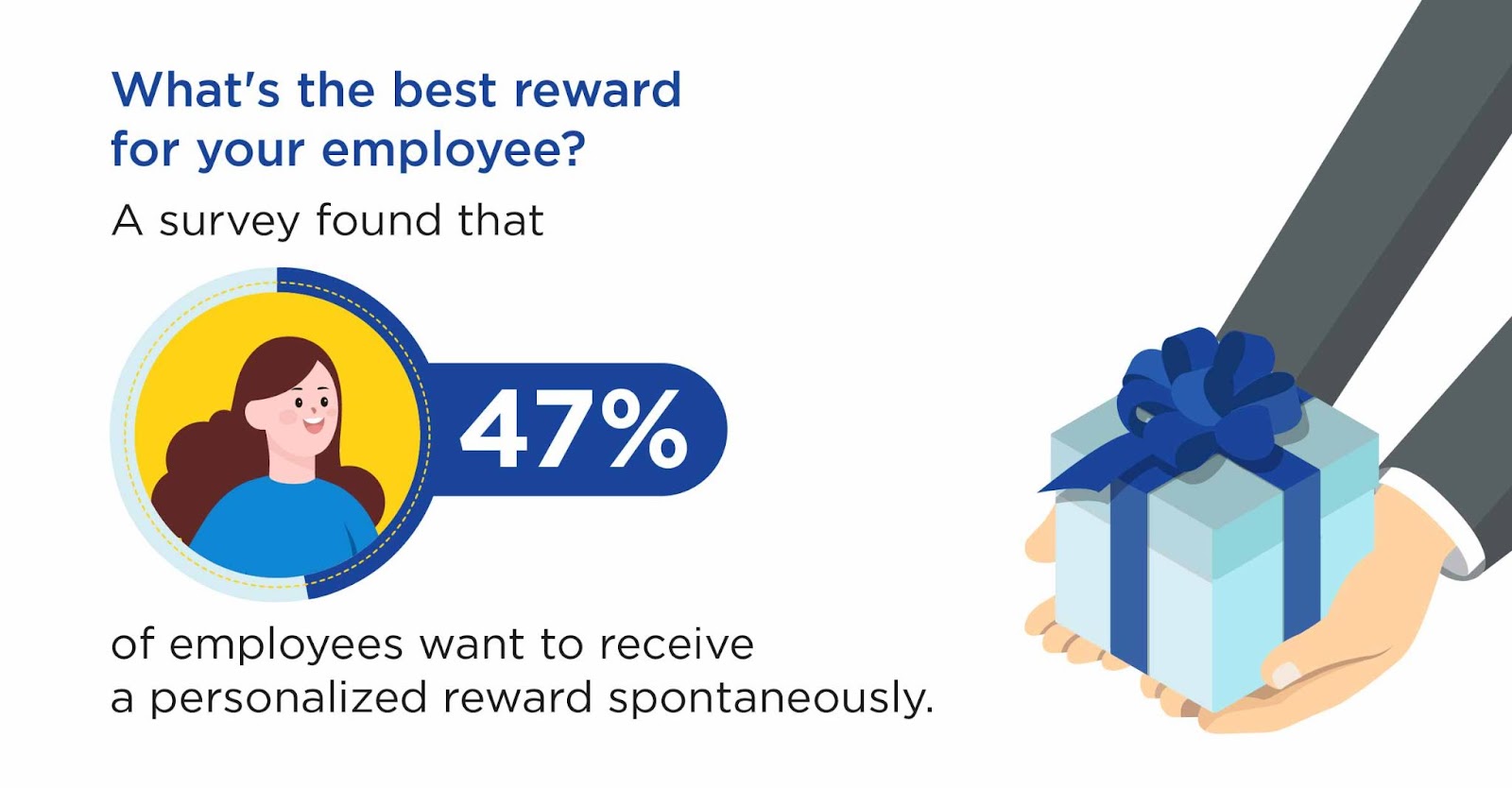
Not all rewards are created equal. The most effective employee reward programs offer rewards that align with employees’ needs and preferences.
1. Financial Rewards
Financial rewards remain the most universally understood and appreciated, such as:
-
-
- Performance bonuses
-
-
-
- Target-based incentives
- Gift vouchers with fixed value
-
Financial rewards are flexible and attractive, but overuse without variation may reduce their motivational impact.
2. Non-Financial Rewards
Non-financial rewards often create stronger emotional impact, including:
-
-
- Public recognition (e.g., Employee of the Month)
- Certificates or appreciation plaques
- Opportunities to attend training or conferences
-
For many employees, recognition and growth opportunities can be as valuable—if not more—than monetary rewards.
3. Physical Gifts (Merchandise & Products)
Items like gadgets, work equipment, or exclusive merchandise remain popular, especially when they are:
-
-
- High quality
- Relevant to employees’ lifestyles
- Personalized
-
This is why access to a wide and diverse gift catalog is important, so companies avoid repetitive or uninspiring choices.
4. Experiential Rewards
Experiences often leave a deeper emotional impression than physical items, such as:
-
-
- Staycation vouchers
- Concert or event tickets
- Hobby, wellness, or lifestyle classes
-
These rewards are highly effective for building emotional engagement.
5. Flexible and Digital Rewards
Modern employees value flexibility. Digital rewards; such as balance-based vouchers, allow employees to choose how and when to redeem them based on personal needs.
Instead of receiving items they may not use, employees gain autonomy in selecting what matters most to them.
How to Design the Right Employee Reward Program
Choosing the right rewards requires a structured approach to ensure real impact.
1. Understand Employee Profiles and Needs
Employees differ in preferences, influenced by age, life stage, and lifestyle.
Practical steps include:
-
-
- Conducting reward preference surveys
- Analyzing employee demographics
- Reviewing feedback from past programs
-
2. Align Rewards with Business Objectives
Rewards should support company goals. Ask:
-
-
- What behaviors should be encouraged?
- Which KPIs or milestones matter most?
-
This ensures rewards function as strategic tools, not random gifts.
3. Ensure Fairness and Transparency
Unclear reward criteria can reduce motivation rather than increase it. Make sure:
-
-
- Evaluation criteria are clear
- Processes are transparent
- All employees have equal opportunities
-
4. Leverage Technology for Scalability
Manual reward management becomes increasingly complex as organizations grow. Digital reward platforms enable:
-
-
- Automated reward distribution
-
-
-
- Clean tracking and reporting
- A seamless employee experience
-
5. Evaluate and Improve Continuously
Employee reward programs are not static. Regular evaluation ensures continued relevance and effectiveness.
Wrap Up
An effective employee reward program is not just about giving gifts. It’s about recognizing employee contributions in a relevant, structured way; one that ultimately drives motivation, engagement, and business performance.
To ensure reward programs go beyond HR initiatives, companies need clear strategies supported by the right technology. Through Tada, organizations can manage employee reward programs more effectively, with access to over 1,000 reward options and Tadakado gift vouchers that employees can redeem based on their individual needs.
If you’re looking to design a more impactful employee reward program or need a flexible gift voucher solution for your team, request a demo today and start building a recognition system that truly works.




.png)