Customers are the lifeblood of every business; without them, no company across any industry can maintain steady cash flow, let alone grow.
But "customers" is not a monolithic group. For many companies, there are two distinct customer types that matter equally: the end consumer who buys the product, and the channel partner; the distributor, retailer, or agent, who serves as a B2B customer and is responsible for getting that product to market in the first place.
Keeping both groups engaged, motivated, and loyal is one of the most important commercial challenges any business faces. Markets today make it harder than ever: intense competition, price-sensitive buyers, and unpredictable economic conditions mean that neither customers nor partners stay by default. They need a reason to.
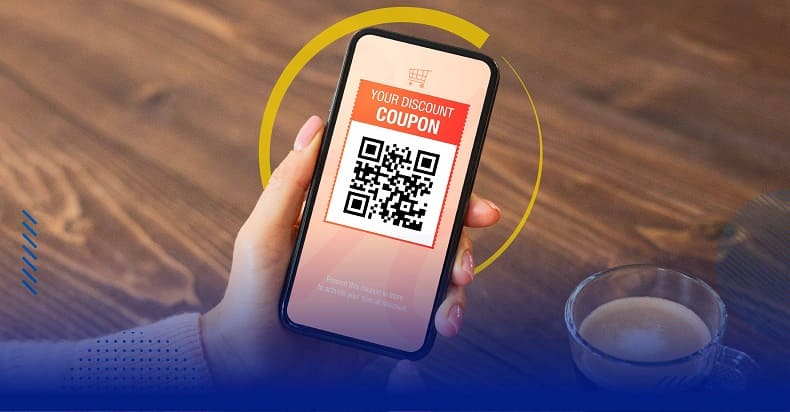
One of the most effective and proven ways to retain existing customers and partners while attracting new ones is a loyalty program; a structured system that rewards people for the behaviors that matter most to your business.
Why Customers Are Harder to Keep Than Most Businesses Realize
For consumer businesses, the retention picture is very clear.
-
-
- The average eCommerce retention rate across industries sits at just 28.2%; meaning nearly three out of four customers who buy once never come back without a deliberate effort to bring them back. (MobiLoud)
- According to HBR, acquiring a new customer costs 5–25 times more than retaining an existing one. Yet most marketing budgets still allocate the majority of spend toward acquisition and relatively little toward retention.
-
Loyalty programs exist specifically to close that gap to make it economically rational for customers to stay rather than switch.
For B2B channel partners, the challenge is different but equally significant.
-
-
- Partners; distributors, wholesalers, retailers, sales agents, simultaneously represent multiple brands. They are not exclusively yours. Without a formal reason to prioritize your product over a competitor's, they will naturally default to whichever brand makes their daily commercial life easier.
- Channel partner churn in many B2B industries runs between 10% and 30% annually. (Everstage) When a key distribution partner leaves, they take their outlet network, their market knowledge, and their customer relationships with them.
-
Loyalty programs; designed correctly for each audience, address both problems simultaneously.
The Core Difference: What Each Audience Is Actually Being Motivated to Do
The most important thing to understand about loyalty programs for customers versus channel partners is that the behavior you are trying to change is entirely different.
-
-
- For end customers, you are trying to influence personal consumption decisions: buy more often, spend more per visit, try a new product category, refer a friend, stay with the brand instead of switching to a competitor. These are individual decisions, made by one person, often emotionally driven, and usually involving relatively small transaction values repeated frequently.
- For channel partners, you are trying to influence business decisions: stock your product, allocate more shelf space to it, recommend it over a competitor's in a sales conversation, hit a quarterly volume target, train their staff on your product range, expand coverage into new outlets. These are commercial decisions, made by a business entity or a professional sales team, driven by financial incentives and relationship dynamics, and often involving large transaction values with longer decision cycles.
-
Because the behaviors are different, the program mechanics, reward types, communication channels, and success metrics need to be different too.
Customer Loyalty Programs: What They Look Like and How They Work
Customer loyalty programs are the most visible form of loyalty in everyday life; the coffee points, the airline miles account, the supermarket points that accumulate with every grocery run. They are designed around the consumer's daily routine, purchase frequency, and personal preferences.
The goals of a consumer loyalty program are typically some combination of:
-
-
- Increasing purchase frequency; getting customers to come back more often
- Growing average transaction value; rewarding higher spend or broader product range
- Improving retention and reducing churn; giving customers a reason to stay rather than switching to a competitor
- Generating referrals and advocacy; turning loyal customers into a word-of-mouth acquisition channel
- Capturing behavioral data; understanding what members buy, when, through which channel, and in response to which triggers
-
What drives participation?
-
-
- Research shows that 69.8% of consumers join loyalty programs primarily to earn rewards, discounts, or cashback. (Antavo) But the programs that retain members long-term do more than deliver financial value; they create a sense of recognition and belonging.
- 84% of consumers say a loyalty program influences their decision to keep shopping with a brand, and 75% actively change their spending behavior to earn more rewards. (Capital One Shopping)
-
What makes them work?
Simplicity, relevance, and visible progress.
A consumer needs to understand in seconds how they earn and what they're working toward. Programs with confusing earning rules or rewards that feel unattainable lose members within weeks of enrollment.
Channel Partner B2B Loyalty Programs: A Different Commercial Game
Channel partner loyalty programs; also called B2B loyalty programs, channel loyalty programs, trade loyalty programs, or partner incentive programs, operate on a fundamentally different commercial layer. Rather than shaping how someone spends their personal money, they shape how a business allocates its selling effort, its shelf space, and its recommendation.
According to Forrester, 75% of all world trade flows through indirect channels; meaning the majority of global commerce depends on partners making daily decisions about which brand gets their time and attention.
The goals of a B2B loyalty program typically include:
-
-
- Increasing partner sales volume; motivating partners to sell more of your products
- Winning product placement and shelf priority; ensuring your products are visible and accessible
- Driving product mix behavior; getting partners to push specific SKUs, new launches, or high-margin lines
- Expanding geographic coverage; rewarding partners for reaching new outlets or territories
- Reducing partner churn; keeping high-performing partners from switching to competitors
- Building sell-through intelligence; using program participation to capture data on what moves where
-
What drives participation at the B2B level?
-
-
- Financial incentives matter; rebates, performance bonuses, and volume rewards are the commercial language of distribution.
- But the research reveals something beyond pure economics: 81% of channel partners say the opportunity to earn rewards strengthens their relationship with the manufacturer (IRF), and partners who feel genuinely valued and recognized are 60% more likely to stay with a brand long-term. (99minds)
- The emotional dimension of being seen and appreciated by the brand they represent carries real weight in long-term partner retention.
-
The performance differential is measurable
A 2025 study by Motivation Excellence found that channel partners enrolled in a structured loyalty program grew sales 39% year-on-year, while non-enrolled partners in the same network declined 16%; a 3.3x performance gap between those inside the program and those outside it.
Side-by-Side: The Key Differences at a Glance
|
Customer Loyalty Programs |
Channel Partner B2B Loyalty Programs |
|
|
Who participates |
Individual end consumers |
Distributors, wholesalers, retailers, sales reps, agents |
|
What you're motivating |
Personal purchase behavior |
Commercial selling behavior |
|
Decision type |
Emotional + rational, individual |
Financial + relational, business |
|
Reward preference |
Points, cashback, exclusive access, experiences |
Rebates, discounts, performance bonuses, business support, recognition |
|
Biggest risk |
Disengagement after enrollment |
Complex rules, delayed payouts, one-size-fits-all design |
|
Data generated |
Consumer purchase behavior |
Sell-through data, regional performance, partner activity |
|
Relationship dynamic |
Brand to individual |
Brand to business (and brand to individual within that business) |
Benefits of Running Both Customer Loyalty Program & B2B Loyalty Program

When a business runs a well-designed consumer loyalty program alongside a channel partner loyalty program, the commercial effect is compounding; not additive.
-
-
- Consumer programs create demand pull: customers ask for your product by name, show brand preference at the shelf, and advocate for the brand in their networks.
- Channel programs create supply push: partners stock your product first, recommend it actively, and display it prominently.
-
Together, they close the loop. Consumer demand created by your loyalty investment meets a motivated distribution network ready to fulfill it; rather than seeing that demand satisfied by a competitor's product that happens to be more prominently placed.
The data backs this up. Companies running both consumer and B2B loyalty programs report:
-
-
- 32% higher revenue, alongside a 30% market share increase and 19% improvement in net operating income in IRF's landmark Fortune 500 channel incentive analysis (IRF)
- 20% faster market entry compared to companies without structured partner programs (IRF)
- Channel programs that reach 112% average ROI when properly designed, implemented, and monitored (IRF)
-
What to Keep in Mind Before Building Either Loyalty Program
For customer programs:
-
-
- The most common failure is launching with a reward catalog that doesn't reflect what members actually want; built around internal convenience rather than customer preference.
- Survey before you design, and
- Build a communication cadence from day one
-
For channel partner programs:
-
-
- The most common failure is slow or unreliable reward delivery, combined with rules too complex for a busy distributor or retailer to understand and act on.
- Fast payouts and simple, unambiguous earning rules are not nice-to-haves; they are foundational to the program's credibility.
-
For both:
The program needs a reliable loyalty platform behind it. Without the right loyalty infrastructure; real-time tracking, flexible reward delivery, WhatsApp for communication channel, and API integration to existing commercial systems; even the best program design breaks down in execution.
Wrap Up
Customer loyalty and B2B channel loyalty are not competing strategies; they are complementary layers of a complete commercial system. One builds demand. The other ensures that demand is fulfilled. Together, they create a brand that is difficult to displace from both sides of the market.
Most businesses are stronger on one side than the other. Identifying which side needs more investment is one of the most valuable commercial questions a decision-maker can ask.
Tada is Indonesia's leading loyalty and rewards platform, built to support both dimensions simultaneously; consumer-facing loyalty programs and B2B channel partner programs, with WhatsApp loyalty option, flexible digital rewards including Tadakado (redeemable via QRIS), and deployment options across SaaS, private cloud, and on-premise.
Request our demo now to see what a program designed for your specific audience looks like in practice.



.png)