Selling on marketplaces like Shopee, Tokopedia, TikTok Shop, and others can deliver impressive sales volumes. However, brands face two critical challenges: lack of access to customer data and high marketplace fees that continuously erode profit margins.
Without customer data, brands struggle to build long-term relationships or execute retargeting strategies. Meanwhile, marketplace fees ranging from 5-15% per transaction make it difficult to improve profitability.
Indonesia's e-commerce marketplace sector holds tremendous potential. However, to maximize these opportunities, brands cannot rely solely on marketplace sales volume.
Brands need a strategy to capture customer data, increase repeat orders, establish direct communication with customers, and guide them toward purchasing through higher-margin channels. This is where marketplace loyalty programs become essential.
What Is a Marketplace Loyalty Program?
A marketplace loyalty program is a rewards initiative designed to incentivize customers who purchase products through online marketplaces. Typically, this type of program serves as an add-on or extension of a brand's existing customer loyalty program, enabling the brand to reach customers across all sales channels.
These programs can be seamlessly integrated with a brand's official marketplace store to capture desired customer data while making it easier to retain customers.
What makes marketplace loyalty programs particularly attractive is their flexibility; the mechanics can be customized to meet each company's unique needs.
One common approach involves including a thank-you card with a QR code in the product packaging sent to customers. When scanned, the code directs customers to a website or WhatsApp where they can register, validate their online purchase, and earn loyalty points.
Benefits of Marketplace Loyalty Programs for Your Business
1. Direct Access to Customer Data
Brands obtain customer data directly from customers who voluntarily provide their information in exchange for rewards. This includes WhatsApp numbers, names, and more. The entire process is legal and compliant with Indonesia's Personal Data Protection Law (UU PDP) because customers provide explicit consent.
2. Improved Customer Retention and Repeat Orders
Customers enrolled in loyalty programs are more likely to make repeat purchases because they want to accumulate points for rewards. The points system also creates a psychological lock-in effect; customers feel they're losing value if they don't continue purchasing due to the points they've already earned.
3. Redirect Customers to Brand-Owned Channels
One of the biggest advantages is the ability to direct customers to purchase through your official website or physical stores by offering enhanced incentives (for example: 2x points for purchases on your website or at offline stores).
This helps brands reduce marketplace dependency and increase profit margins by avoiding high marketplace commission fees.
4. Targeted and Personalized Communication
With comprehensive customer data, brands can execute more effective marketing strategies. Messages can be personalized based on purchase history, product preferences, or customer behavior. This increases conversion rates and engagement.
5. Build Brand Loyalty and Community
Loyalty programs help brands cultivate an engaged customer community. Customers who feel valued through rewards become more loyal and are more likely to recommend the brand to others.
6. Increase Customer Lifetime Value (CLV)
Loyal customers who make repeat purchases have a significantly higher lifetime value compared to one-time buyers. With a loyalty program, brands can substantially increase CLV, ultimately improving long-term profitability.
7. Gain Valuable Customer Insights
Data collected from loyalty programs provides insights into customer demographics, purchasing behavior, favorite products, and market trends. Brands can use these insights to optimize marketing strategies, product development, and inventory management.
8. Boost Revenue and Profitability
Ultimately, all the above benefits lead to increased revenue and profitability. Higher repeat order rates, loyal customers, and the ability to direct customers to higher-margin channels all contribute to sustainable business growth.
How to Create a Marketplace Loyalty Program
Here are the steps you can take if you don't yet have a WhatsApp-based loyalty program and have limited internal development resources:
Step 1: Set Up WhatsApp Business Official and Integrate with a Loyalty Platform
Brands need to register for WhatsApp Business Official through Meta (Facebook). This process requires business verification and Meta approval. Once WhatsApp Business Official is active, integrate it with a loyalty platform that can connect with marketplaces and offers BSP (Business Solution Provider) integration.
A loyalty platform integrated with WhatsApp BSP will handle:
-
-
- Integration of the loyalty engine with WhatsApp Business API
- Chatbot flows for customer registration and point redemption
- Validation systems for point claims (via receipt photos or transaction numbers)
- Automatic notifications for points earned and available rewards
- Flexible reward systems and gift catalogs
-
Step 2: Promote Your Loyalty Program
Once the program is running, promote it through all your brand's channels. One essential touchpoint is the thank-you card included in every product package shipped to customers through marketplaces.
Brands can generate QR codes to print on thank-you cards that, when scanned by customers, direct them to the brand's official WhatsApp for registration, point claiming from marketplace purchases by entering invoice or order numbers, and point redemption for various rewards offered by the brand.
Case Study: Thiqla's Marketplace Loyalty Program
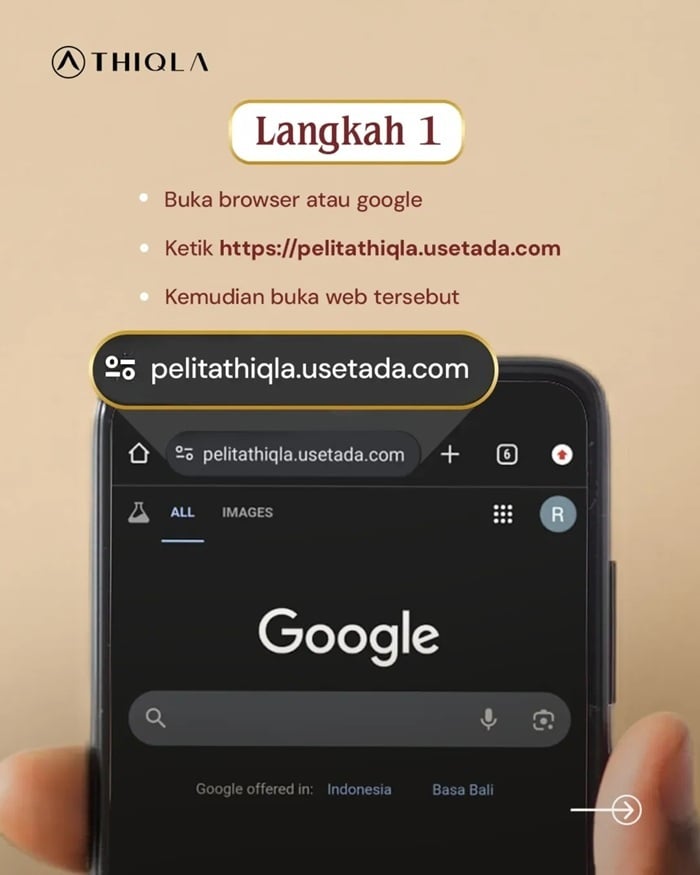
One Indonesian brand successfully running a marketplace loyalty program is Thiqla, a jewelry brand specializing in accessories like necklaces, bracelets, and rings.
Thiqla runs a marketplace loyalty program for customers who purchase their products on Shopee and Tokopedia. Thiqla's customer loyalty program uses a combination of website and WhatsApp as primary channels.
How It Works:
-
Customer Receives Thank-You Card with QR Code
Every customer who purchases Thiqla products on marketplace receives a thank-you card in their package. This card includes a QR code that directs customers to Thiqla's loyalty program website.
-
Customer Scans QR Code and Registers
Customers scan the QR code and are directed to Thiqla's loyalty program website (https://pelitathiqla.usetada.com/). There, they can register by entering basic information such as name and WhatsApp number.
-
Claim Points by Entering Invoice Number
After registration, customers can click the "Redeem Points" menu on the website. They then enter the invoice code from their Shopee or Tokopedia transaction. The system validates the invoice and automatically credits points to the customer's account.
-
Points Can Be Redeemed for Thiqla Products
Accumulated points can be exchanged for Thiqla products in the rewards catalog. This strategy not only increases repeat purchases but also ensures customers remain engaged with the Thiqla brand.
Wrap up!
Ready to elevate your customer retention strategy to the next level? Explore various implementation possibilities for marketplace loyalty programs with Tada today.
Our platform can integrate with your existing loyalty program and popular Indonesian marketplaces like TikTok, Tokopedia, and Shopee, enabling you to easily reward online customers and track their activity.
Request our demo now to learn more about how marketplace loyalty programs can benefit your business.




.png)